About us
The idea of worm composting took hold of us on a balcony in the centre of the city in 2017 and has stayed with us ever since. The simplicity and ingenuity of this method, combined with the potential to solve one of the biggest waste problems, is what drives us to bring this solution to the world.
Our history
-
2014
Foundation of the WormUp association
Four friends have an idea: to promote the circular economy with the help of worm composting. -
Ab 2014
WormUp in the media
The media become aware of our approach and report on our idea, including SRF Einstein and Kassensturz. -
2016
Crowdfunding
Successful crowdfunding campaign on wemakeit. Pre-order for more than 200 composters. -
2017
Foundation WormUp GmbH
The aim is to offer sustainably produced worm composters along the entire value chain. -
2018
TUBE / SCALE
Expansion of the product range: clay compost tubes for garden and raised beds (TUBE) and garden and community composters made of larch wood (SCALE). -
2019
BUNDESPREIS ECODESIGN
Winner with WormUp HOME 1, the highest state award for ecological design in Germany. -
2019-2022
Process development for commercial vermicomposting
Production of Oecoplan worm compost for COOP Bau&Hobby/Jumbo in cooperation with the CoopFond for Sustainability. -
Ab 2021
School project
The 'Learning Site Worm Compost' project brings the cycle to life in schools. -
2023
Crowdfunding HOME 2
Successful crowdfunding campaign on wemakeit.further development of the HOME 1 composter. Pre-order for more than 300 composters. -
2024
OYEAS / INSECT CITY
Expansion of the product range with OYEAS ceramic irrigation and the INSECT CITY insect hotel. -
Impact
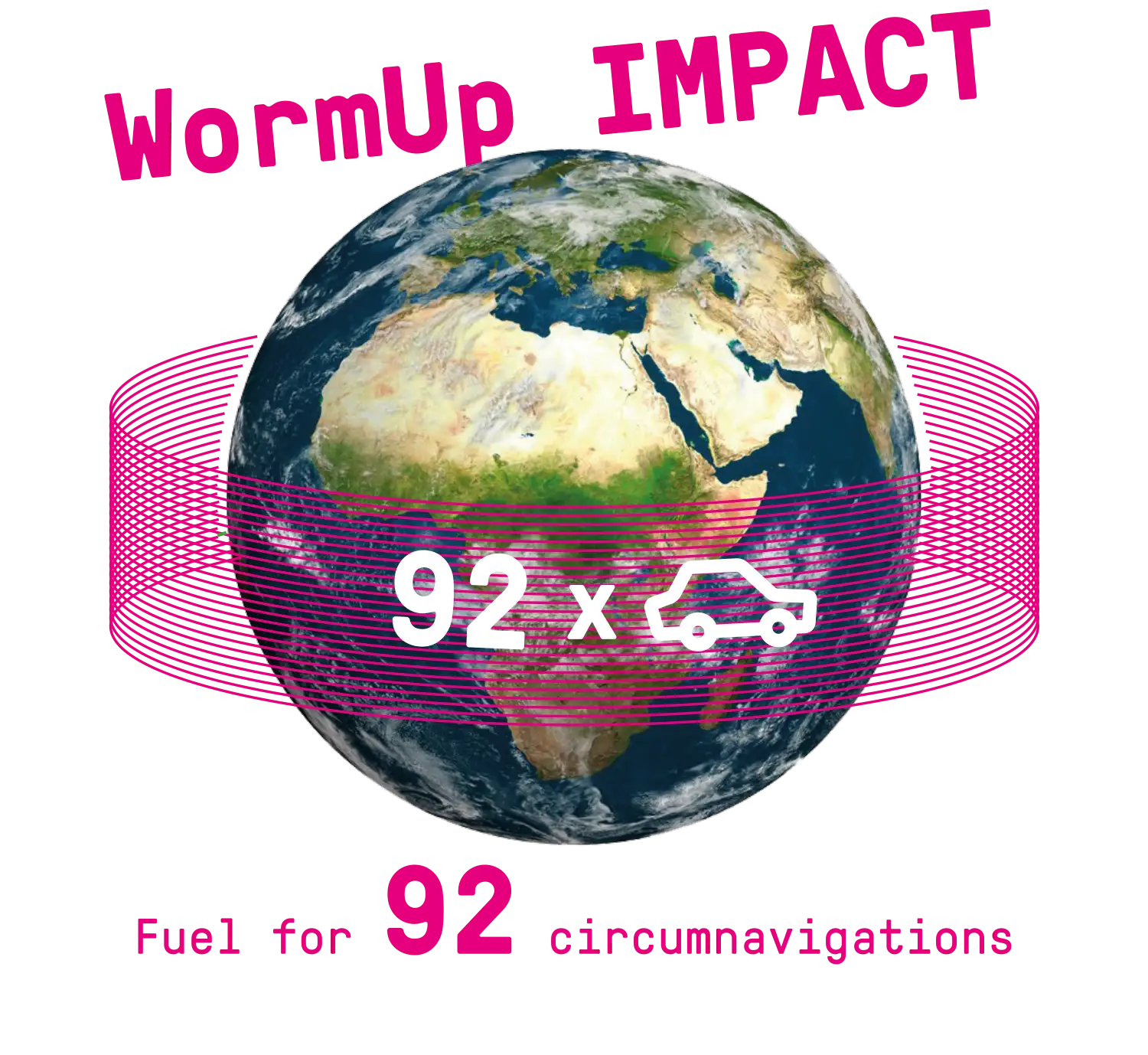
210'000 KG CO2EQ
have been saved since WormUp was founded. You can find more information below.
Our Team
-
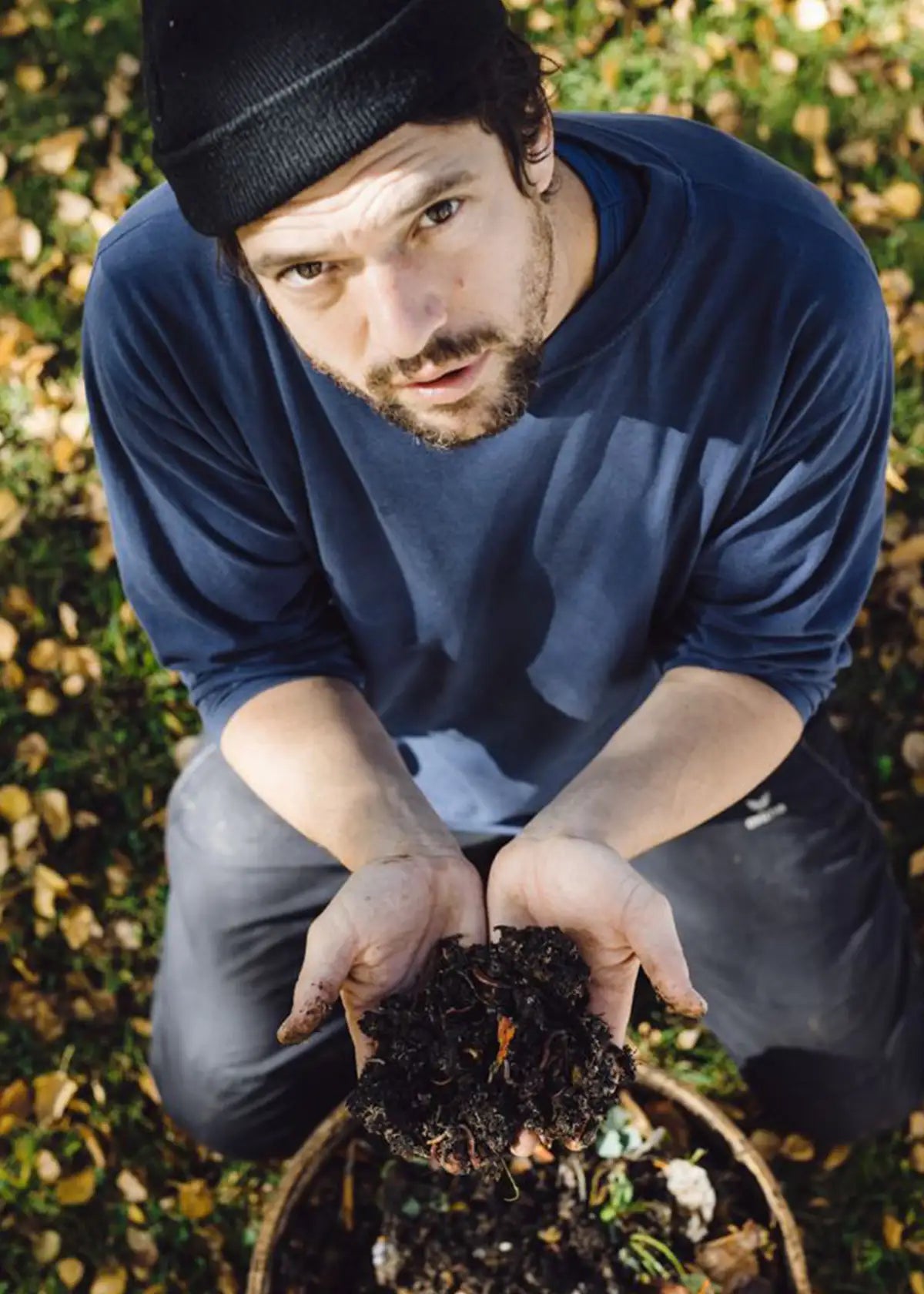
Erich
Product development
-
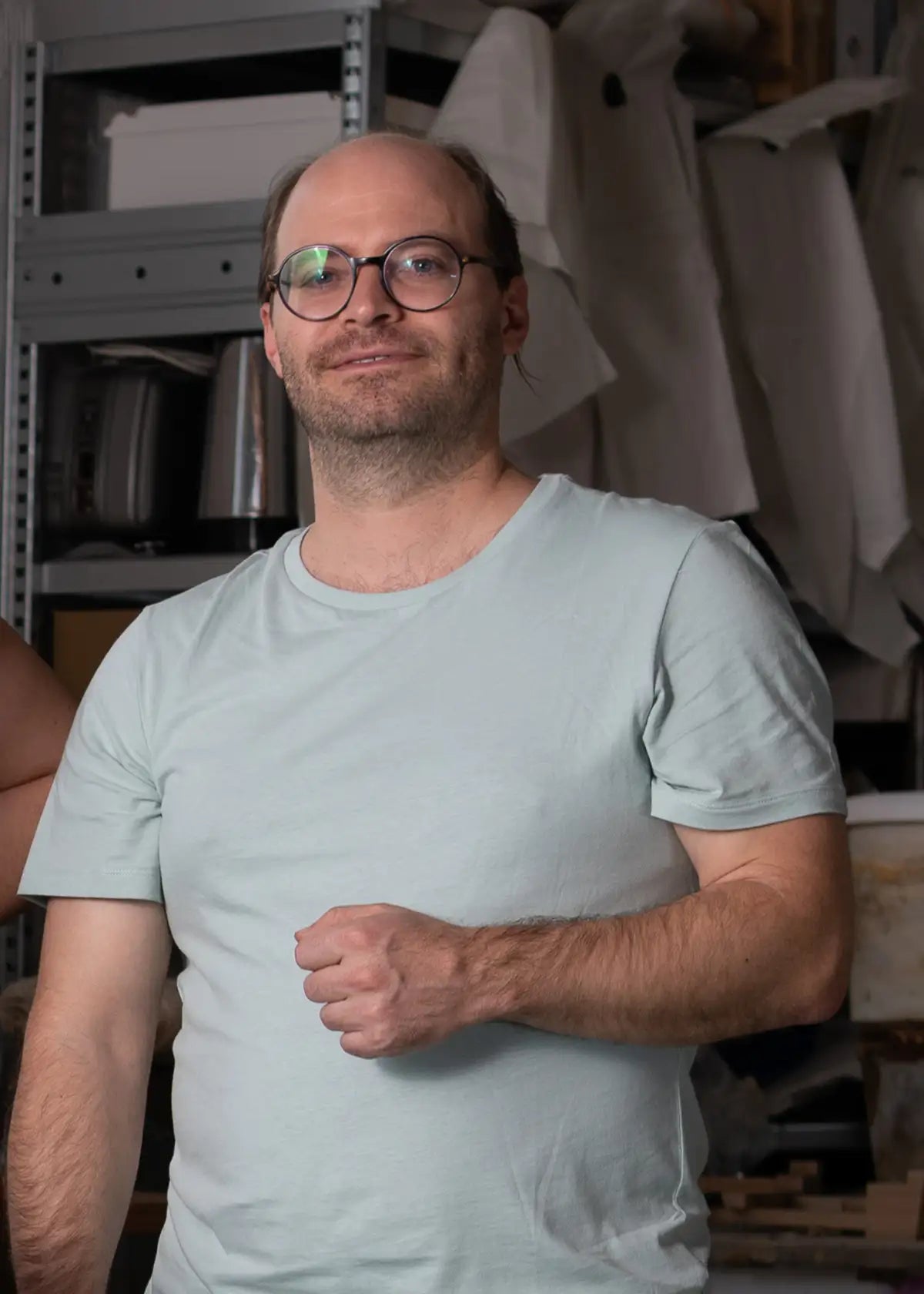
Nikolai
Finances
-
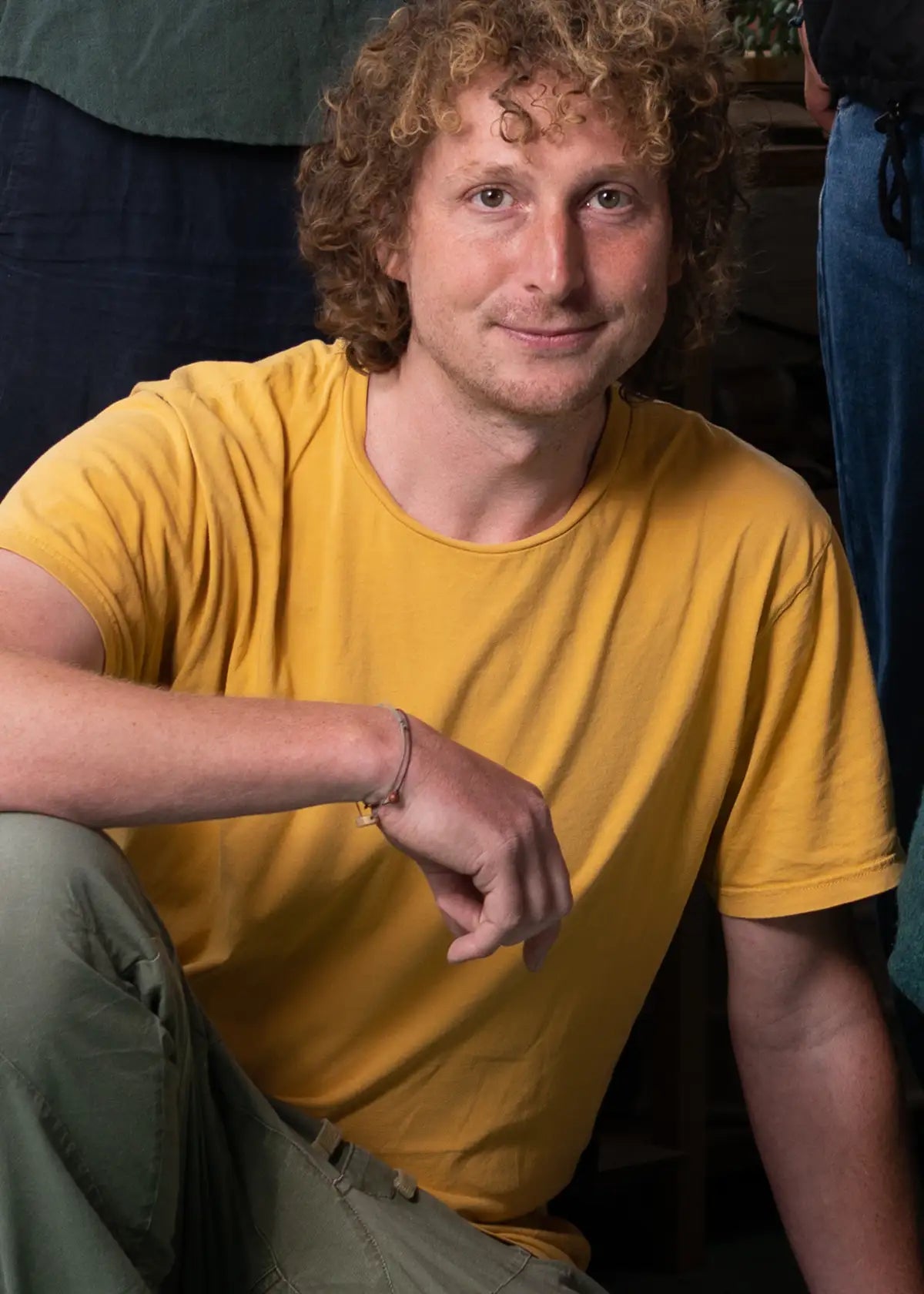
Lorenz
Research, IT

From linear to circular
Working together to replace the linear economy with a circular society that is fair to all generations. By composting at home, you can make an important contribution to achieving this vision.
The problem
Too much organic waste ends up in the trash – in Switzerland and worldwide. Organic nutrients are destroyed and water is transported unnecessarily. At the same time, we replace these nutrients with synthetic fertilizer. This linear system places a significant burden on the environment, climate and society: food waste is responsible for 8% of global CO₂ emissions.
Our approach
We make organic waste visible and enable environmentally conscious people to recycle it at home easily and odor-free - with our award-winning vermicomposting system. These transform waste into valuable fertilizer (worm castings) and are made of durable, aesthetic materials. Our low-tech systems are easy to use and bring joy to everyday life. Studies show: Just consciously separating waste in the household increases a sense of responsibility and reduces food waste. We not only create solutions, but also inspire a more careful use of resources.
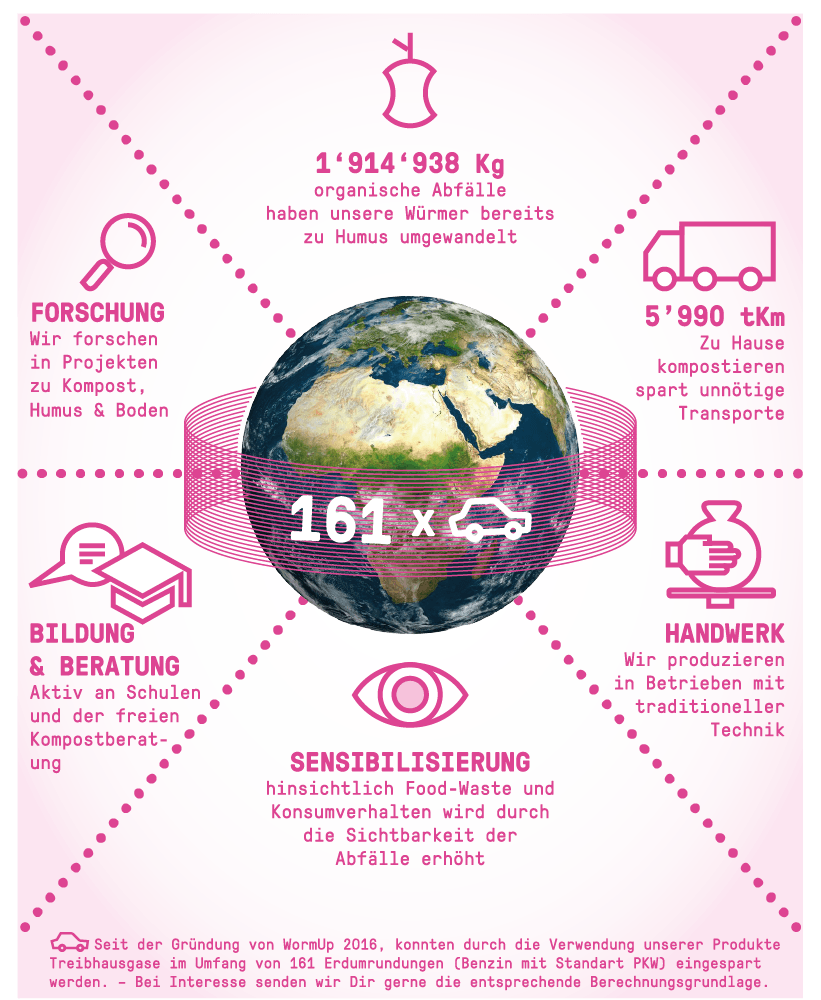
Our impact
vermicomposting means more than just recycling organic waste. Not only does it reduce the contents of the garbage bag and produce high-quality fertilizer directly on site, it also makes organic waste visible. This increased awareness has been proven to help reduce the amount of food waste in households.
In addition to providing our systems, we promote the discourse around organic waste through workshops, research projects and training courses for teachers. We share our knowledge every day - with free compost advice for everyone.
By producing our clay composters in Europe, we support traditional manufacturers and preserve a valuable craft in the region.
-
>9'000 pcs.
worm composters have been in use since 2016.
-
1'380’000 kg
organic waste was saved from the rubbish bag
-
5’990 tkm
fewer transport kilometres in Switzerland
-
61,000 kg CO2e
saved through compost substitution
-
30'921 kg
less food waste
As of: November 2024